
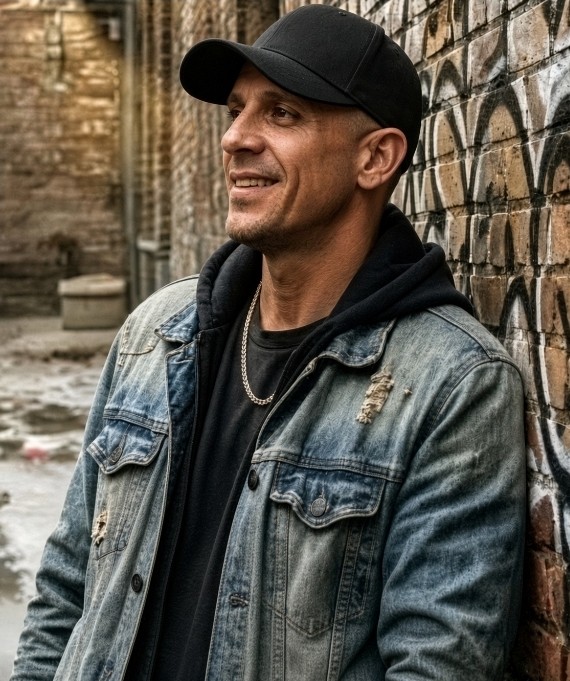
WHITEY ROXXX: FROM BROOKLYN’S STREETS TO THE RECORDING BOOTH, TURNING REAL-LIFE STRUGGLES INTO A DIFFERENT PATH
With a story shaped by loss, incarceration, street experiences, and the determination to build a different future, Whitey Roxxx is using music to document the realities he has lived through while creating something meaningful for the next generation.
For Whitey Roxxx, music has never been about simply making records or chasing recognition. It is about documenting life as he has experienced it, confronting the consequences of his decisions, and finding a new direction after years of circumstances that could have easily defined the rest of his existence. Raised in Brooklyn, New York, before eventually relocating to Toronto, the emerging artist brings a perspective shaped by street life, personal losses, family responsibilities, and the difficult process of trying to change.
His sound is unapologetically street-oriented, combining dark trap production, aggressive delivery, straightforward storytelling, and elements of the 1990s hip-hop era that first inspired his appreciation for the culture. Influenced by legendary figures such as 2Pac, The Notorious B.I.G., Coolio, Wu-Tang Clan, 50 Cent, and Eminem, Whitey Roxxx approaches music with an emphasis on authenticity, lyrical detail, and subject matter that does not shy away from uncomfortable realities.
However, behind the hard-edged production and street-centered narratives is an artist whose relationship with music is deeply personal. His journey involves the loss of both parents, time spent incarcerated, the challenges of fatherhood, and the realization that the same energy once invested in destructive choices could be redirected toward something constructive.
His introduction to music began during his teenage years, driven primarily by a genuine love for the art form. Although music remained an important part of his life while he was navigating the streets, it was during incarceration that songwriting became a serious and consistent pursuit. With limited distractions and little else to occupy his time, he finally began putting the thoughts, experiences, and observations that had accumulated over the years onto paper.
Looking back, he describes that period as the most focused and serious writing he had ever done. What initially existed as an appreciation for music gradually developed into a personal outlet and, eventually, a possible route toward a different future.
That period was also marked by one of the most devastating experiences of his life: the loss of his mother. Whitey Roxxx was incarcerated during his final bid when she passed away. Having already lost his father when he was approximately 17, his mother had been his only remaining parent. He was her only child, and one of the most painful parts of his musical journey is knowing that she never had the opportunity to hear his music.
For him, continuing to write was about more than keeping himself occupied. It was also about holding on to the hope that, once released, he could demonstrate that he was genuinely attempting to change his circumstances. Even though his mother would never physically witness that transformation, the intention behind it remained significant.
That sense of purpose continues to influence his decision to pursue music professionally. While additional income would certainly be welcomed, financial rewards are not the primary motivation. Instead, he wants to discover how far his records can travel, how many people can connect with his experiences, and whether he can build something lasting from the life he has lived.
His children are another major part of that motivation. Having experienced the consequences of his previous decisions, he wants them to witness a different version of their father: someone committed to building something real, taking responsibility, and creating opportunities through a more constructive direction.
A SOUND ROOTED IN STREET REALITIES AND 90s HIP-HOP
Musically, Whitey Roxxx describes his sound as hard, street-oriented trap with a dark edge, narrative-driven lyrics, and a noticeable influence from the boom-bap movement of the 1990s.
For him, the 1990s represented an era when hip-hop carried a particular level of authenticity. The music was direct, unapologetic, and often deeply connected to the environments and experiences of the people creating it. That philosophy continues to shape his expectations of what a hip-hop record should represent.
His approach combines heavy production with aggressive delivery and straightforward storytelling. Rather than relying on excessive polish or unnecessary embellishments, he prefers records that communicate their message clearly. He wants the listener to understand the subject matter without having to search for hidden meanings or decode an overly complicated presentation.
His influences reflect that philosophy. Artists such as 2Pac and Biggie demonstrated how personal experiences, difficult environments, and complicated realities could be transformed into compelling records. Coolio brought a distinctive approach to storytelling, while Wu-Tang Clan helped establish an uncompromising lyrical identity. Meanwhile, 50 Cent and Eminem further influenced his understanding of delivery, attitude, and the ability to make records that remain memorable.
These artists did more than provide musical inspiration. They helped establish the foundation for how Whitey Roxxx approaches his own writing.
When discussing what inspires his songwriting, he points primarily to personal experiences and the environment in which he was raised. Imagination plays a role in shaping his delivery and presentation, but the foundation of his music usually comes from things he has personally experienced or witnessed.
That distinction is important to him because he believes listeners sometimes misunderstand the relationship between street music and reality. People may assume that everything being discussed in a record is exaggerated for entertainment, when certain lyrics are simply documenting situations as they happened.
For Whitey Roxxx, the objective is not to create fictional drama. It is to present a perspective that reflects the realities behind the music.
FROM AN IDEA TO A COMPLETE RECORD
Whitey Roxxx’s creative process begins with something specific: a memorable line, an experience, or a particular situation that stays on his mind.
Rather than approaching every record with a rigid formula, he allows the initial idea to determine the direction of the song. If the concept has enough strength, he often begins with the hook, believing that a compelling chorus should be capable of carrying the record independently.
Once the hook is established, he develops the verses around the details that make the subject matter believable. He pays attention to how the lyrics sound when spoken aloud, making adjustments whenever a particular line feels unnatural.
Authenticity is central to that process. He wants the finished record to sound like something he would genuinely say rather than a collection of lines assembled simply because they rhyme.
At this stage of his career, he also prefers working independently. Having a clear understanding of the atmosphere and direction he wants for his music, he finds that creating alone allows him to maintain creative control.
That does not mean he is opposed to collaboration. He remains open to working with other artists and producers, provided they understand the direction of the record and contribute something meaningful without compromising its original identity.
For him, the ideal collaborator is someone who respects the tone, understands the energy, and can strengthen the music without attempting to soften or redirect its message. Whether working with someone locally in Toronto or an international creative, musical compatibility matters more than an impressive name.
BROOKLYN, TORONTO, AND THE EXPERIENCES THAT SHAPED HIM
To understand Whitey Roxxx’s music, it is important to understand the environments that shaped his perspective.
Born and raised in Brooklyn, New York, he experienced a childhood and adolescence that eventually took him down a difficult road. He dropped out of high school at a young age and began getting involved in trouble early, including drug use, street activity, and arrests.
His father passed away when he was approximately 17 years old. Both of his parents were originally from Toronto, and following his father’s death, his mother eventually moved back there. Whitey Roxxx followed shortly afterward.
For a period, things appeared to be moving in a more positive direction. However, he eventually returned to some of the same patterns that had contributed to his earlier difficulties. As an adult, those decisions resulted in significant jail time.
During this period, he also got married and had children, but the consequences of his choices ultimately cost him relationships and important parts of his family life.
These experiences have given him a complicated relationship with his past. He does not pretend that every decision was justified or that the consequences were insignificant. Instead, he recognizes how those choices affected the people closest to him and the direction his life took.
Despite everything, he remains proud of his roots. Brooklyn and Toronto both played significant roles in shaping his identity, his understanding of the world, and the perspective he brings into his music.
Those environments are not simply geographical references in his story. They are part of the foundation of his artistic identity.
His upbringing also explains why his music gravitates toward subjects that are often uncomfortable. He understands the realities behind the environments he describes, and he believes those experiences should be presented honestly rather than romanticized.
‘STILL OUTSIDE’: THE ALBUM THAT INTRODUCED HIS STORY
Although Whitey Roxxx’s catalogue is primarily built around singles, he has released two albums, with his first project titled Still Outside.
The album represents an important chapter in his development as an artist, particularly because it contains music connected to some of the most personal experiences of his life.
Among its tracks, one stands above the rest in terms of emotional significance: ‘Only Son.’
The record was the first song he recorded after getting out of jail, making its place in his catalogue particularly meaningful. More than an ordinary album track, it serves as a dedication to his mother, who passed away while he was incarcerated.
Having lost his father during his teenage years, his mother represented his only remaining parent. As her only child, their relationship carried an especially important place in his life.
The fact that she never got to hear any of his music makes the record even more emotional. ‘Only Son’ represents an opportunity to express feelings that he can no longer communicate directly to her.
Interestingly, he acknowledges that the song might not necessarily be among his fans’ most popular choices. Nevertheless, that has little impact on its importance to him.
It is his personal favourite, and its meaning extends far beyond streams, audience reactions, or commercial performance.
For Whitey Roxxx, the record is a reminder of where he has been, what he has lost, and why choosing a different direction matters.
‘CRACK’: DOCUMENTING THE DAY-TO-DAY REALITIES OF STREET LIFE
While Still Outside established an important foundation for his catalogue, his current musical focus includes singles such as ‘Crack,’ a record centred on the day-to-day realities of a particular side of the street economy.
Rather than approaching the subject through exaggerated drama, the song focuses on the different elements involved in that environment: the process, the people who come through, the money, and the constant pressure surrounding it.
The intention is to present the subject matter directly, allowing the listener to understand the circumstances being described.
Creating a record like ‘Crack’ also presented a particular creative challenge. Whitey Roxxx had to find the right balance between providing enough detail to make the song authentic and ensuring that the final product remained listenable.
He also spent considerable time refining the hook, recognizing that a strong chorus would be essential to giving the record its identity and making it memorable.
That attention to structure demonstrates an important part of his approach to music. Although authenticity remains his priority, he understands that a record must also work musically. A compelling subject alone is not enough; the delivery, production, arrangement, and hook all have to come together.
With more singles planned, ‘Crack’ represents part of a broader direction built around consistent releases, recognizable themes, and a presentation that reflects the seriousness with which he is approaching his career.
THE REALITY BEHIND THE MUSIC
One of Whitey Roxxx’s biggest frustrations with how people interpret street-oriented music is the assumption that everything being presented is purely performance.
He believes a significant amount of the material comes from documenting actual situations. Listeners may interpret certain details as exaggerations created for entertainment, but some of those accounts are simply reflections of things the artist has experienced or witnessed.
This is particularly relevant to his style because he does not attempt to distance himself from the environments discussed in his records.
At the same time, he is careful about the message he wants people to take away. He is not asking listeners to glorify street life or view the lifestyle as something desirable. Instead, he wants them to understand the perspective, the circumstances, and the costs associated with it.
His music provides a look into particular experiences without suggesting that those experiences should be repeated.
When dealing with criticism, pressure, and expectations, he tries to distinguish useful feedback from unnecessary noise. Having already experienced considerable pressure outside the music industry, he finds that the challenges associated with releasing records and developing an audience are relatively manageable.
He prefers to concentrate on the work rather than allow outside opinions to determine his direction.
His experience in the industry is still developing, but one lesson has already become clear: artists must understand their own sound and story. Without that clarity, other people may attempt to reshape the music according to their expectations.
For Whitey Roxxx, maintaining that identity is essential.
THE PERSON BEHIND WHITEY ROXXX
Despite the intensity of his music, there are aspects of his personality that listeners might not immediately expect.
One of them is his interest in baseball.
It may seem like an unexpected hobby for an artist whose records are heavily influenced by dark trap production and street narratives, but baseball is something he has always enjoyed following outside music.
His personal life and career are not always easy to separate. He describes music as both an emotional outlet and a long-term plan, meaning that experiences from his personal life naturally find their way into his songwriting.
Nevertheless, he tries to maintain boundaries where possible and remain intentional about the direction he is taking.
The absence of both parents continues to influence that perspective. Knowing that neither his mother nor his father is here to witness his musical journey gives him another reason to approach his future with greater purpose.
His children are equally important to that motivation. He wants them to see him building something meaningful rather than being defined by the mistakes of his past.
When asked what he might be doing if music were not part of his life, his answer is particularly revealing.
He believes he might still be involved in the crack game, possibly incarcerated or even dead.
His response is blunt, but it highlights just how significant music has become in his life. He credits it with giving him an alternative route, one that allows him to channel his experiences and energy into something that can potentially create a better future.
As he puts it, ‘Thank God for the music.’
LOOKING BEYOND THE NAME: WHAT COMES NEXT?
With his attention currently on singles, Whitey Roxxx is preparing to continue releasing music that reflects the same dark, direct, and street-oriented identity established in his earlier work.
Fans can expect more records in the style of ‘Crack,’ alongside new material with clear themes and a consistent presentation.
Rather than dramatically changing his sound to accommodate commercial expectations, he wants to continue developing the direction that feels natural to him.
His ideal collaborations would involve artists and producers who share a similar grounded approach. Locally, he is open to connecting with Toronto-based creatives whose music carries a comparable sense of authenticity. Internationally, he is interested in working with people who understand darker, straightforward trap production without forcing a commercial direction onto the music.
Looking five years ahead, his ambitions are relatively straightforward. He wants consistent releases, growing streams, and enough momentum for his music to stand independently.
He is not necessarily looking to abandon the subjects that have defined his songwriting. Instead, he wants to reach a larger audience while continuing to tell the same kinds of stories with greater visibility.
There is also a deeply personal dimension to that ambition. He wants to prove to himself, his late parents, and his children that the direction he is taking now is different.
When asked about a song he wishes he had written, he does not identify a particular record or artist. Instead, he admires music that manages to address difficult subject matter with honesty while still achieving widespread replay value.
For him, that balance between authenticity and musical appeal is one of the most difficult things to accomplish.
It is also something he hopes to achieve throughout his own catalogue.
A MESSAGE BEYOND THE MUSIC
Ultimately, Whitey Roxxx wants listeners to approach his music with an understanding of what it represents.
His records offer a straightforward look at certain aspects of street life, including the work, the money, the people involved, and the consequences that come with those experiences.
He is not interested in presenting those realities as something to glorify. He wants the perspective to be understood, and he wants listeners to recognize that there is a difference between documenting an environment and encouraging people to become part of it.
More importantly, he wants his journey to communicate that a person’s past does not have to determine their future.
The same determination, energy, and focus that once kept him moving through the streets can be redirected toward creating music, building something meaningful, and making different decisions.
His story is not one of pretending that the past never happened. It is about acknowledging what happened, understanding its consequences, and finding a way to move forward.
His mother never got to hear the music. His father never got to witness this chapter of his life. His children, however, still have the opportunity to see what he builds from here.
That reality gives his ambitions a meaning that extends beyond the recording booth.
Whitey Roxxx is still early in his musical journey, but he has a clear understanding of the identity he wants to establish and the message he wants to communicate. Through records like ‘Crack’ and deeply personal songs like ‘Only Son,’ he is building a catalogue that reflects both the environment that shaped him and the future he hopes to create.
There is no attempt to rewrite history or present a perfect version of himself. Instead, he is using the experiences he carries to create something honest.
And perhaps that is the most important part of his story: music gave him another option when the alternatives seemed limited.
Now, he wants to see how far that different path can take him.
At this point it is safe to say he is one of the talented stars to look out for. Check out his magnificent piece of work via the link below: